

Microsoft’s mobile strategy: Create Windows-like app ‘experiences’ for smartphones - hermanntwel1952
Windows watchers disquieted what would become of Microsoft after a sweeping reorganization that emphasized "experiences," rather than Windows. As Microsoft kicks bump off its Build developer conference in Seattle connected Monday, we now have a better melodic theme: Microsoft is investing in Windows experiences on mobile devices, with a new app called Your Phone; a migration of Windows 10's Timeline productivity feature to phones; and an update to its launcher app for enterprises.
While Microsoft is also expected to discuss some of the features of its close Windows 10 update (code-named "Redstone 5") at Build, the company indicated that it will be emphasizing cross-chopine apps instead. Microsoft leave hash out some of these in a Tuesday presentation by Joe Belfiore, who leads Windows "experiences" as the corporate vice president in the Operating Systems Group at Microsoft.
The idea, Belfiore said in a briefing in advance of the evidenc, was that Microsoft needs to recognise what users are working on, across some device. "Whether you look at a Word doc on Android, iOS, or Windows, is moot," Belfiore said.
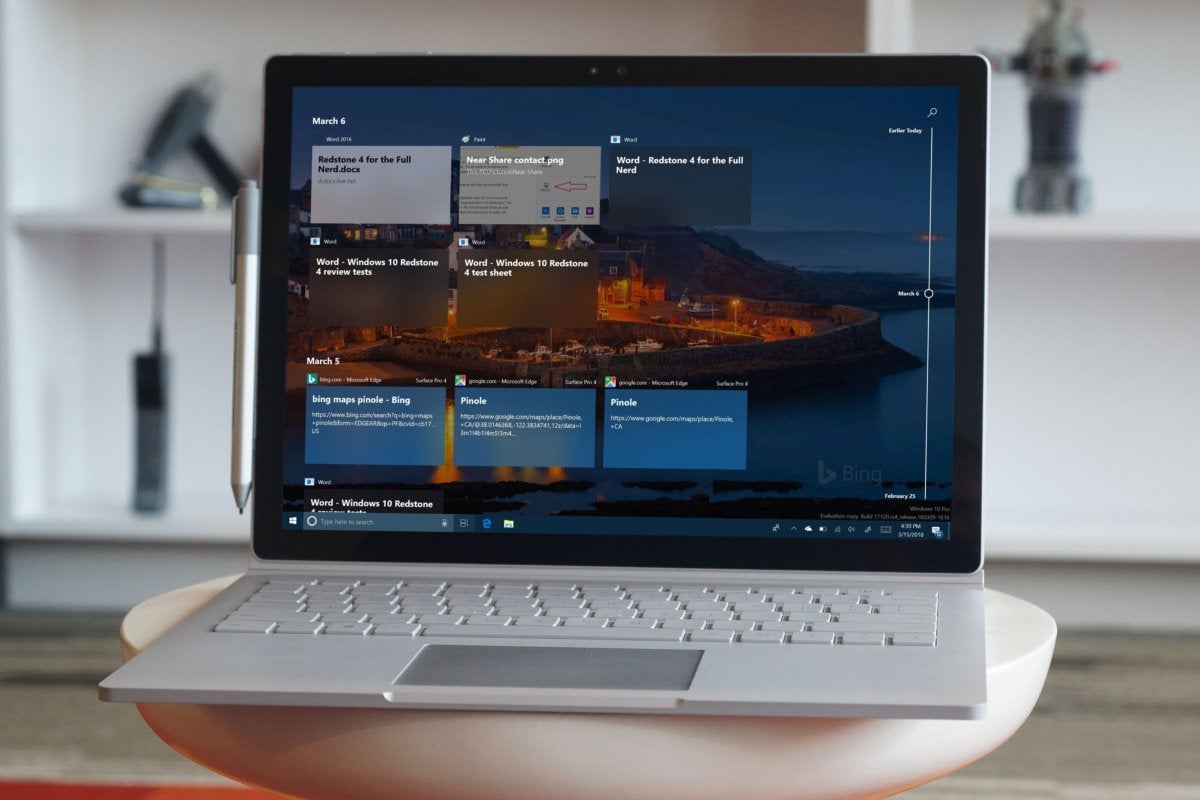
Belfiore was talking about Timeline, the feature that tracks your make for in the Office apps or Edge, recording your activity in what Microsoft calls the Microsoft Graph. But Belfiore could have been talking about any hardware platform. Microsoft sounds corresponding IT wants to raise Microsoft mobile applications to the level of importance of a PC—making the actualized computer hardware, and in operation system, irrelevant.
Why this matters: After the death of Windows phones, the reorganization that seemingly downplayed Windows was chewed over by analysts and fans alike. A developer conference that continues to de-emphasise Windows won't be well-received by fans. Still, Microsoft seems to be beefing finished its mobile apps for iOS and Android, projecting "Windows" onto platforms Microsoft doesn't in and of itself own. Ii years ago, we suggested that Microsoft's "Plan C" for mobile phones was to seed Microsoft apps and services all over information technology could, and let a garden rise. That future is approaching to come about.
 Gordon Ung/Rob Schultz/IDG
 Timeline, here shown on a Windows PC, will be future to phones.
Your Phone ties your PC to your smartphone
Microsoft isn't orientating the new experiences as part of Windows, simply as a core component of Microsoft 365, a business solution that includes Windows, Office 365 and a mobile twist management solvent. IT's a subscription service for enterprises and educators that Microsoft launched last year, ligature jointly the nearly 700 million Windows 10 devices and the 135 million commercial users that use Office 365. Expect Microsoft to characterise these as what it calls "the intelligent abut," complementing the "intelligent dapple" of Bright blue and other endeavour services. Microsoft wants to unify everything: cloud, device, business, consumer.
 Print Hachman / IDG
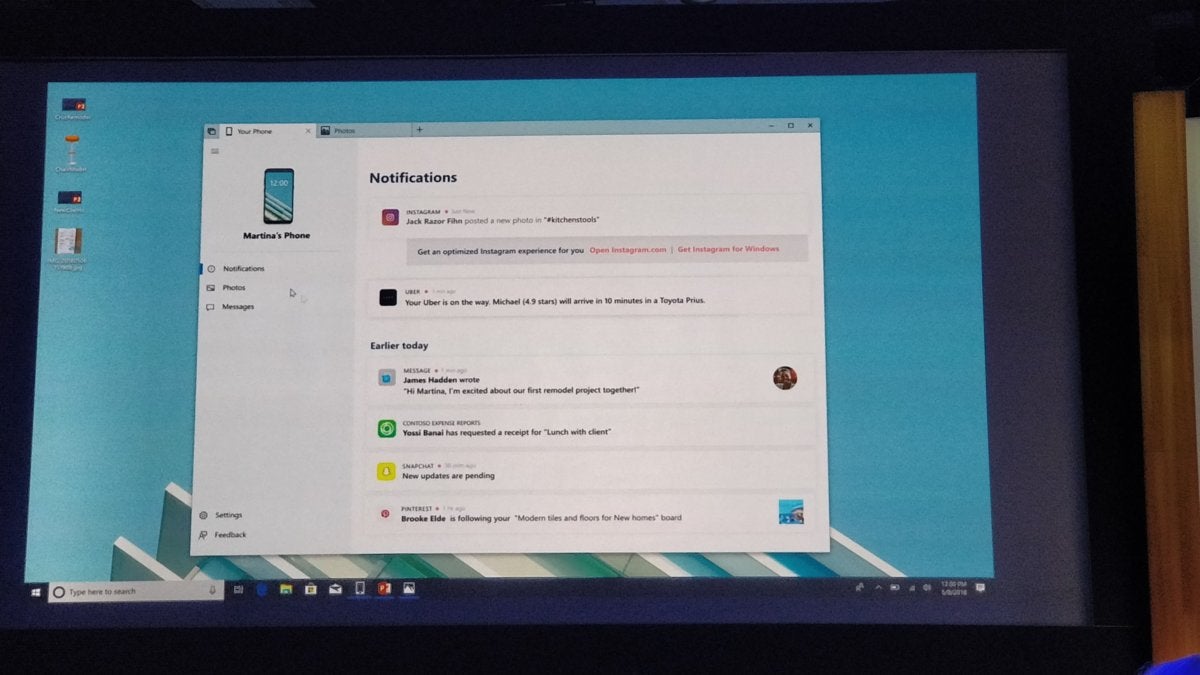
 Ths is how the Your Phone app volition work, showing you your phone's messages and notifications.
The new Your Phone app sounds like single of the archetypical manifestations of that vision. Recall that Microsoft proven, and failed, to puddle phones into PCs with Continuum, which projected the ring's Windows 10 Mobile OS and apps onto a Monitor. With recent versions of Windows 10, Microsoft has gone the other way: You can now reply to texts dispatched your phone from your PC.
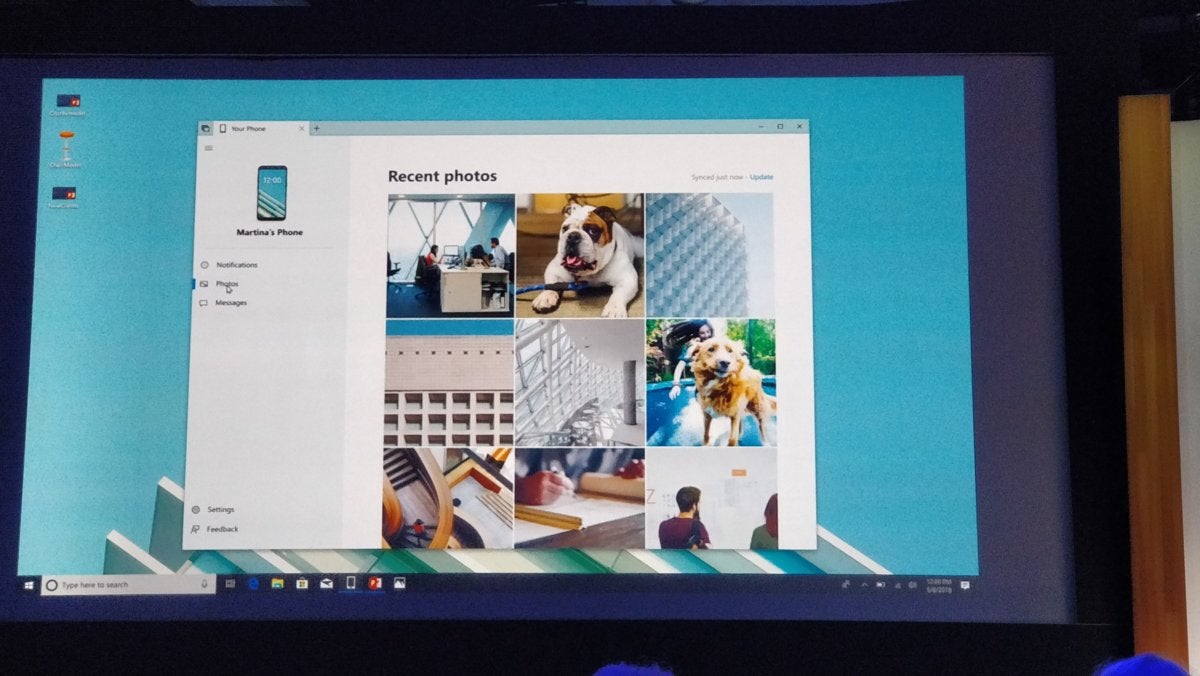
With Your Telephone, a UWP app, users will have "a windowpane into a user's call up right from their PC," allowing them to text from their phone, share photos, and view notifications, representatives aforementioned, rental them work without distraction from their phone. Sharing photos would be a early capability for the Windows platform (though photos snapped with a speech sound, and mechanically uploaded to OneDrive, are already viewable with the Windows 10 Photos app moments later).
 Mark Hachman / IDG
 You can hang back and drop photos betwixt your phone and your PC, too.
YourPhone was reverberant in the Microsoft Store on Friday, though the version published then didn't look to do overmuch too associate the phone and the PC, in overmuch the same way Windows already does. The app encouraged users to download Microsoft Rocket launcher later on sending a associate to the app by text.
 Google / Microsoft
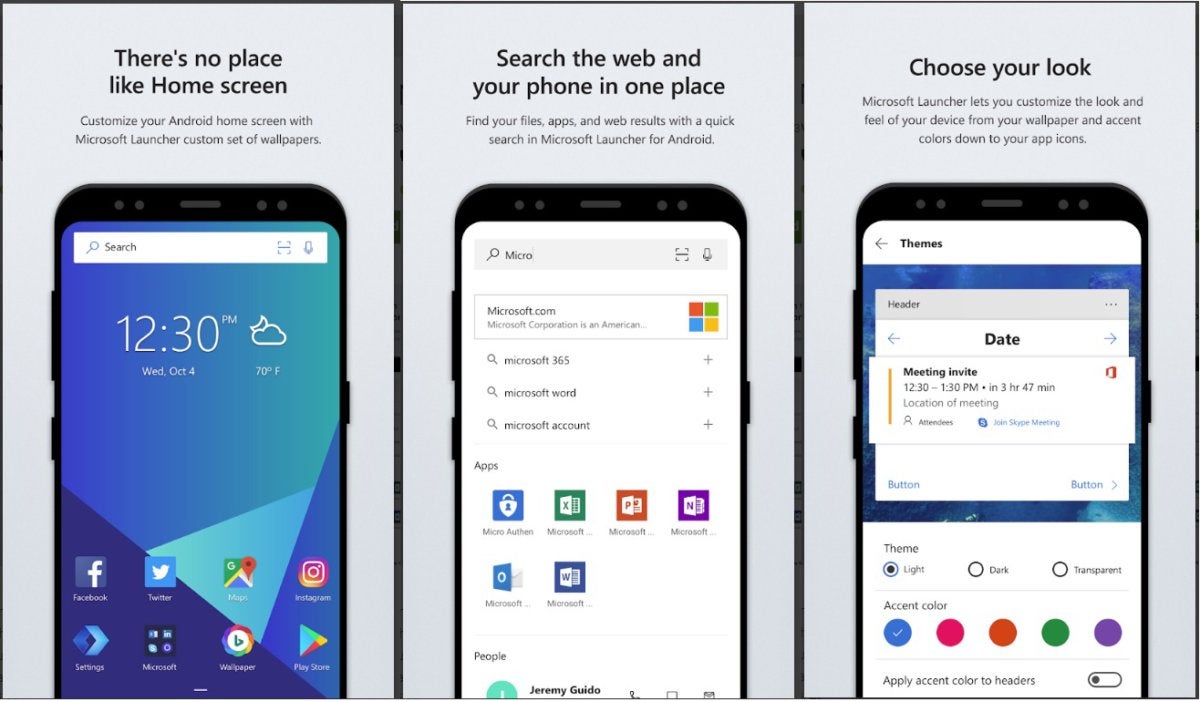
 The Microsoft Launcher app provides a Microsoft-flavored experience connected Android. Look for Microsoft to continue to bellyache it up.
Microsoft's another two pieces of client news are also adaptations of existing capabilities. The Microsoft Launcher app for Android (formerly the Arrow Launcher) already provides a Microsoft desktop of sorts, complete with quick accession to Cortana and Edge, as well as a personalized feed of news, calendar appointments, and other relevant details. Now, Microsoft Launcher will admit enterprise features whose details the company plans to disclose at Build.
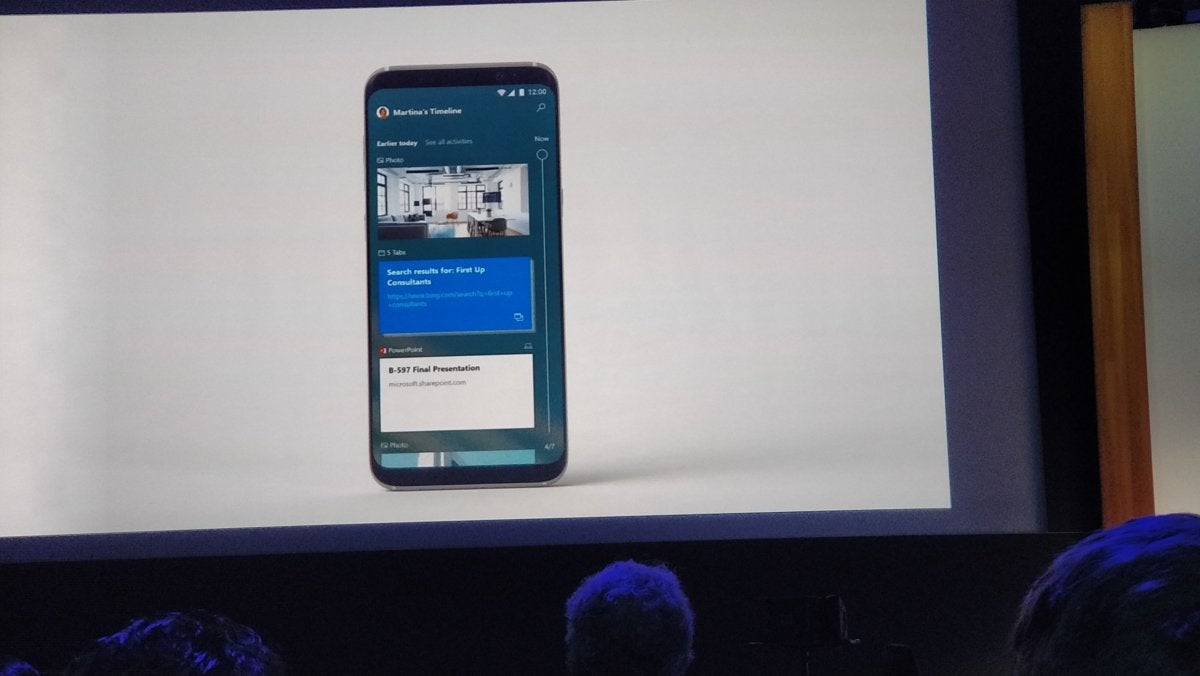 Home run Hachman / IDG
 This is what Timeline for phones will look like.
Microsoft Launcher's enterprise version will as wel let in Timeline, Microsoft executives said, giving Launcher another aspect of Windows on a mobile device. Accordant to Google, complete 10 million users take over installed Microsoft Rocket launcher. When you consider that 8.3 million Windows phones were oversubscribed in the first quarter of 2015, and just 2.4 million a year later (according to Gartner), the party may experience Microsoft Rocket launcher as a Fifth column of sorts, sneaking Windows into the Android ecosystem.
Where's Windows? Only Insiders know
It would be rather bizarre if Microsoft didn't mention Windows at Build, but members of the Insider program sack already witness what Microsoft is working along.
Given the unexpected delays in the rollout of the April 2018 Update, Microsoft has already released ten new builds of the "Hop on Ahead" track of Windows, also titled Redstone 5 or (probably) what testament be called Windows 10 version 1809. Near of the work has been done round Sets, the tabbed interface that Microsoft debuted in the April 2018 Update, and then pulled back for further development. Sets straightaway supports Microsoft Function apps, as well as more than basic apps like Mail. Other improvements include a handy feature for monitoring the battery life of Bluetooth devices within Windows itself, and support for the High Efficiency Image Charge Format, a potential replacement for the JPEG image format.
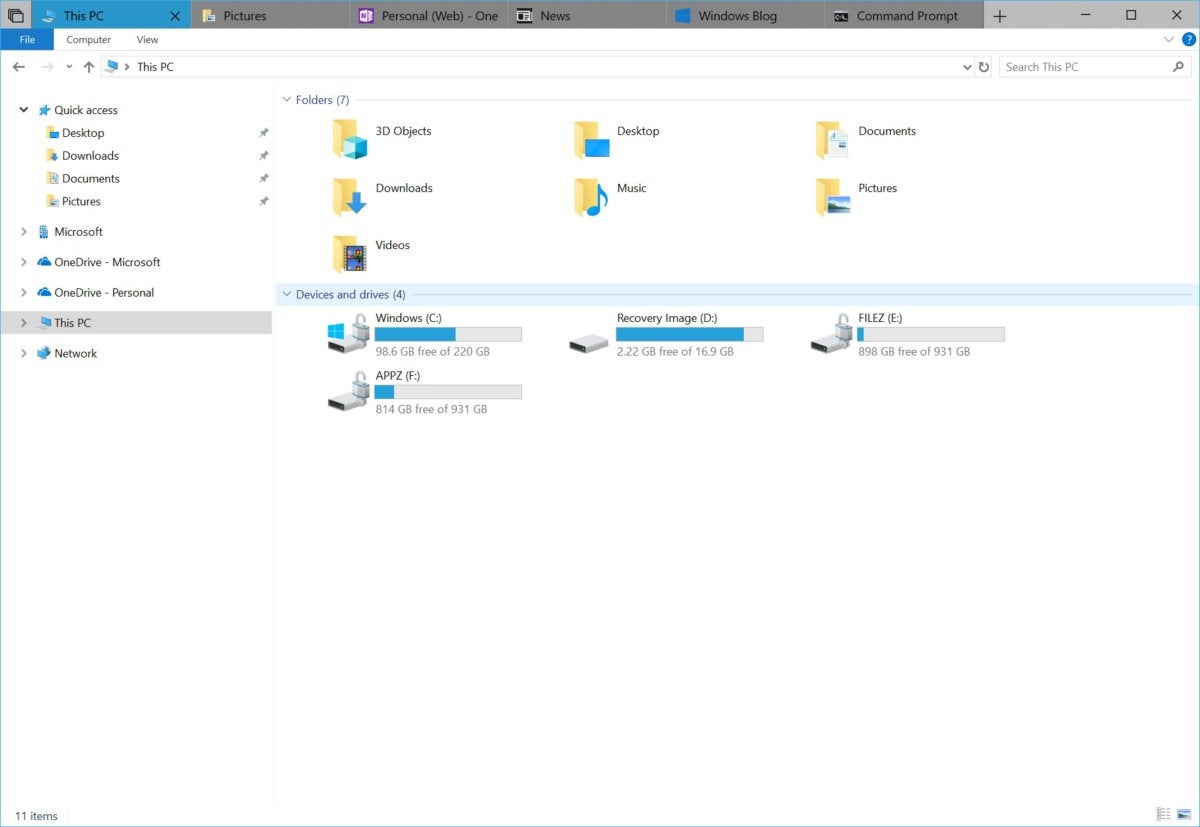 Microsoft
 Sets trades the windowed port that we're accustomed for an optional one that looks more like a tabbed browser. It's just other way of working within Windows.
During his Build intro, Belfiore also proclaimed hot features: Sets will live applied to Timeline, so in addition to the Web pages and apps you were working on, Timeline will show Sets, also. Belfiore successful a pitch for more apps to contribute to the Microsoft Graph, so that those apps would show up within Timeline.
And, unsurprisingly, Cortana testament seduce an appearance within Timeline, too, suggesting what she thinks you might want to work along.
Thither's one interesting feature that will change the behavior of Sets, but also Windows, too: ALT+TAB. While the current AL+TAB keyboard command switches between apps, it sounds like you'll at least have the option to do something new: utilisation Alt+TAB to switch between tabs within Sets.
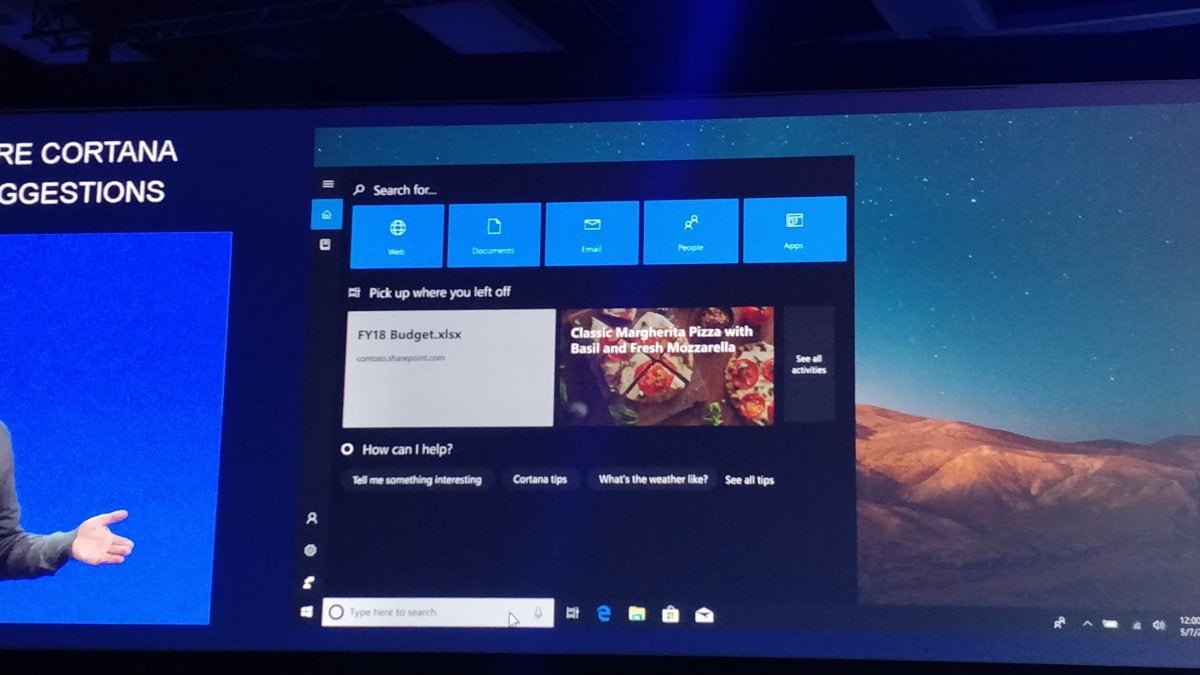 Marker Hachman / IDG
 Cortana bequeath appear within Timeline within a future Windows Insider build.
Microsoft has roughly updates planned for other Windows and Office apps, also. Teams, the collaborative Negligent competitor that Microsoft began rolling out in 2017, will clear new APIs and deeper SharePoint integration. Both Expectation and Teams will also see new Adjustive Cards arrive, the name Microsoft uses for the snippets of text and graphics that fire countenance developers to create rich interactional content—allowing, for example, someone to approve an expense report without leaving Teams. Expect more on PowerBI visualizations in Stand out, every bit well as updates connected Windows Machine Learning (Windows ML) to tittivate Windows and your new devices.
All of the intelligence Microsoft is adding to apps is part of the Microsoft Graph, part of the comprehensive matrix of information Microsoft began talking about three years ago. Microsoft calls the Graph a direction for developers "to connect the dots between citizenry, conversations, schedules, and content within the Microsoft cloud," and add insights. When Microsoft executives talk of artificial intelligence activity (AI) to make apps smarter, the Graph is what company executives want developers to beg into.
And if that's not sufficiency, there's cold cash. In a conjur to tempt more Windows apps from one-third-party developers, Microsoft plans to aggressively raise the revenue cut that developers can earn—leading to 95 percent in bound cases, executives said in advance of Build. (Devs wish become 85 percent of tax revenue if Microsoft sends a drug user to the Shop and buys an app, and 95 per centum if they find it with the developers' help.) Windows users may be frustrated by the lack of emphasis on Windows and the comparatively moo profile Windows has at Build, but developers will undoubtedly represent excited by the prospect of making more money.
This story was updated at 9:24 AM on May 8 afterwards updates from Joe Belfiore's tonic address at Build.
Source: https://www.pcworld.com/article/401920/microsofts-mobile-strategy-create-windows-like-app-experiences-for-smartphones.html
Posted by: hermanntwel1952.blogspot.com
0 Response to "Microsoft’s mobile strategy: Create Windows-like app ‘experiences’ for smartphones - hermanntwel1952"
Post a Comment